Fencing Installer Melbourne: Solutions for Sloping Blocks
If you have a sloping block in Melbourne, you already know the "very easy" fence plan generally doesn't endure contact with the ground. One day the boundary is level sufficient to set blog posts without assuming as well hard, and the following you're standing in a line that drops half a metre across the length of a backyard, attempting to imagine how a straight fencing line will sit without looking like it's trying to escape.
A great fencing installer Melbourne work is not almost driving posts and nailing pickets. Melbourne fence installers It's about checking out the incline, picking an approach that matches the soil and drainage, and building a fence that looks deliberate instead of unexpected. Whether you're after privacy, swimming pool conformity, a limit meaning, or merely a cleaner yard side, the method needs to suit the grade.
Below is just how I think about fencing installers Melbourne clients offer the backyard, what service sloping ground, and where the challenging parts usually hide.
The first reality check: "sloping" can imply really different things
When people say "our block inclines," I picture a few typical circumstances, and they don't all ask for the same solution.
Sometimes the slope is steady. You can mark a line with a string and the ground goes down at a consistent rate. Other times it's uneven, with dips, ridges, or a large decrease that occurs over a brief distance. After that you've got the "tipped" inclines where you can literally see terrace-like adjustments, even if the home is only decently graded.
The difference issues since fencing options react differently to transform. A fence that manages a smooth quality can have a hard time at an abrupt decline, and a system that manages balconies might look unpleasant on an uniform fall.
That is why a fence installer who has done a lot of work throughout Melbourne's suburbs takes notice of the information prior to suggesting a layout. Fence installer Melbourne work that look terrific normally started with a proper measurement, not simply a quick look and a "we'll figure it out on the day."
The two main styles for sloping blocks: action and raked
For most property fencing installer tasks on sloping ground, you wind up selecting between two means to maintain the fence looking right.
The initially is a step approach, occasionally called a "tipped fencing." You keep the panels or pickets near degree in their areas, and you transform elevation progressively by stepping up and to adhere to the slope. Aesthetically, it reads like a series of mini systems. This usually suits wood paling, paling-style personal privacy, and lots of steel panel systems, specifically when you desire each area to rest square.
The secondly is a raked strategy, where the fencing line keeps a consistent "top line" angle that matches the ground's incline. Simply put, the fence adheres to the grade instead of stepping it. Raking can produce a spick-and-span, continual look, but it needs cautious panel alignment and typically a lot more planning to make sure the geometry does not start to look skewed.
In practice, the "finest" choice relies on what material you're making use of and just how stringent you want the visual line to be. A raked fence can look a lot more smooth, while a stepped fencing often looks even more natural where the backyard is already uneven.
Where raking goes wrong (and why it takes place)
The most usual issue I see with raked fencings is inconsistent spacing or misalignment when the ground modifications faster than expected. If the slope differs, the raked strategy might start cool and then discreetly wander out of square as installers go after the ground.
Another trouble is that some products merely do not like raking. Slim sheets, certain panel styles, and some hardwood picket plans can reveal waviness or unequal shadows if the slope angle is also high or changes also quickly.
That's one reason people looking for fence installers Melbourne occasionally ask about "the cleanest appearance," and the right response is typically a customized approach, not a one-size-fits-all technique.
Setting out: the part that chooses whether the fencing looks straight
A fence can just look like its set-out. When the ground slopes, set-out comes to be greater than gauging the limit line. It has to do with making a decision where the fencing "checks out" from the street and from inside the yard.
I have actually seen fences where every article is plumb, every panel is set up appropriately, and the fencing still looks incorrect because the whole run was set too expensive at one end. The incline makes your eyes notice those height distinctions swiftly, especially with picket tops or covering lines.
A strong fencing installer Melbourne arrangement usually includes:
- establishing recommendation factors on secure areas
- checking levels throughout the run, not just at 2 ends
- accounting for any kind of existing footings, garden beds, or keeping edges
- deciding what takes place at gateways, edges, and fence returns
When you reach corners, the incline can deceive you. A post that's technically in line with the border may still develop an obvious height shift if the nearby run has a various quality. Excellent installers prepare those transitions so corners look purposeful instead of like the fencing "jumps" up and down.
Post spacing, grounds, and dirt: the covert engineering
A great deal of people focus on the visual design, then undervalue just how much the dirt and ground technique influences the last fence line.
On sloping blocks, water activity commonly complies with the shape. That suggests the dirt on one side of a run might remain wetter much longer, or it may drain pipes in a different way after heavy rain. If you set up blog posts without taking into consideration that, you can end up with irregular settlement gradually. The fencing could begin flawlessly, then slowly skew.
Post spacing is an additional bar. Broader spacing can look penalty in a degree lawn, yet on a slope with higher wind load or longer spans, it can create a mild "sag" or panel bow. Droop might not be noticeable in the beginning glance, but once the fencing is filled with color fabric, slats, or privacy panels, the distinction ends up being more noticeable.
Timber fences can additionally be affected by exactly how the blog posts are treated and exactly how they being in the ground. If one end is cut greater and exposed to even more wetness, you can obtain faster wear along that section. That is why I favor installers who actually chat through footing deepness and reinforcement options for the specific dirt conditions you have.
A fence installer must not simply ask what design you want. They should ask inquiries about just how water beings in your lawn, where overflow pursues storms, and whether there's any well-known water drainage or underground services.
Gates on slopes: the one detail every person neglects until it's expensive
Gates are where sloping obstructs obtain pricey quickly. A gate frame has to run efficiently, which means the opening needs correct geometry. On a slope, you're not just taking care of height transitions, you're also handling just how the latch and joints straighten when the ground is uneven.
If an entrance remains on a tipped fence run, the hinge posts must be positioned thoroughly so the gate doesn't bind. If eviction remains on a raked line, you're stabilizing the framework angle with the bordering structure. Either way, a tiny mistake can bring about an entrance that scratches the ground, catches in the wind, or liquidates of alignment.
In Melbourne, we additionally see lots of wind across open areas. When the gate is a little out of square, it can take less wind than you would certainly think to press it out of true, which then drags the fence line with it.
This is one reason some customers choosing Fence installer Melbourne solutions choose to pay for precise set-out and hinge positioning up front. It's typically cheaper than fixing an entrance that starts misbehaving after a few months.
Materials: what tends to work best on slopes
Different fencing materials handle incline changes in different ways.
Timber paling and personal privacy fencing frequently fit stepped options well. You can maintain areas reasonably level and tip up the elevation so the leading line doesn't appear like it's twisting. Timber likewise provides you a bit of versatility during installation because profiles and rails can be changed, though you still require competent workmanship.
Metal paling, tubular and panel systems usually festinate on both stepped and raked runs, however the spacing and panel integrity end up being crucial. If the incline is high or unequal, panel alignment errors can show rapidly because metal straight lines are unrelenting visually.
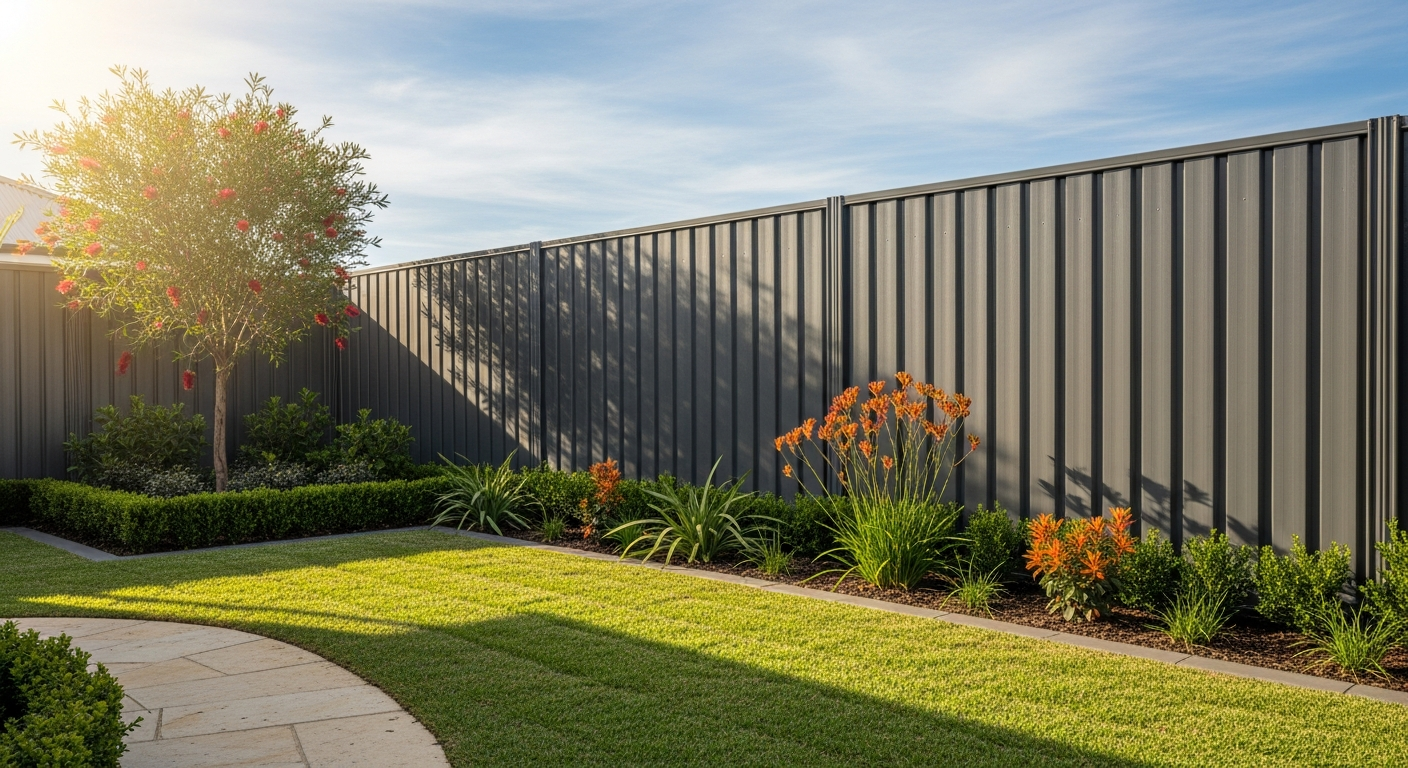
Colorbond and sheeted fences can be set up on inclines with raked lines or tip systems, but you must intend the elevation transitions. Sheet secure fencing can likewise show sunlight and reveal "waves" if the installing factors are not consistent.
Mesh and wire has a tendency to be more forgiving because it doesn't have as many inflexible visual cues. Still, for limit clearness and lasting efficiency, messages and rails should be lined up properly.
If you're consulting with Fence installers Melbourne, it's worth asking how they intend the run for your material on a slope like your own. A great answer will seem like they've done it in the past, not like they're guessing.
A practical example from a regular Melbourne backyard
A few years back, I worked with a work where the front half of the limit went down visibly towards a garden bed. The client desired a full personal privacy look making use of wood. On paper, the slope appeared straightforward: a constant tip over most of the run.
On site, we found the ground had a neighborhood dip right near the gate return. That dip would have made a raked plan look manipulated, since the top would certainly have needed to alter angle mid-run to keep consistent coverage.
We made use of a tipped technique, with shorter areas around the dip location. It indicated the fence really did not resemble it was flexing with the yard. It appeared like the backyard had actually shaped the fence, which is specifically what you desire on a sloping block.
The compromise was somewhat extra work in trimming and lining up the rails, plus additional care around eviction. Yet the last look was clean, and the client didn't have that "why does it feel greater over there?" moment that often shows up in sloping installs.
Drainage and overflow: why your fence can't disregard water
Melbourne rain can transform backyard conditions over night. On an incline, water usually locates the fastest path, and fencings can enter into that story, even if you never intend them to.
If your fence rests near a drain line or under a location that remains wet, you need to think of message corrosion and lumber long life. In functional terms, that suggests choosing a footing strategy that keeps articles secure in damp dirt, and materials that match the conditions.
Another detail is that garden beds frequently shift along a fencing line over time. If you elevate soil degrees versus the fencing after landscaping, you can catch wetness versus timber posts. That reduces the life of the fence and can also push the fence line out of true if the ground starts moving.
A fence installer ought to preferably ask whether your backyard has drain concerns or where runoff goes after heavy rain. It's the sort of concern that sounds "fundamental" till you have actually had to go back to repair a fence that was great at set up day, after that gradually degraded along a moist edge.
Neighbour limits and elevation rules: plan early, not last minute
On sloping residential properties, height dimensions can be complicated due to the fact that what is "the ground" at the measurement point can vary. Some areas call for specific measurement methods along the fence line. I will not act every council has the very same rules, and I'm not mosting likely to guess for your address.
But the lesson is consistent: speak to a fence installer early concerning how they manage compliance and just how they measure heights on sloping ground. An expert fencing installer Melbourne ought to be able to discuss their process clearly, and they must be willing to collaborate with whatever authorizations or neighbor agreements apply to your project.
Even if you're not aiming for maximum height, sloping blocks can produce "unintended overs." One run might satisfy your target elevation at one end and surpass it at the various other if the measuring approach isn't planned.
Choosing a fence installer Melbourne: what to try to find when the ground is tricky
When you're hiring a fence installer, your ideal signal is not just the quote. It's just how they manage questions and exactly how certain they get regarding your site.
Here are the important things I advise you search for when you're comparing Fence installer Melbourne service providers or asking Fence installers Melbourne for a sloping-block solution.
- They ask about slope variation, not simply "just how much it slopes"
- They reveal you how they'll approach steps versus raking for your chosen material
- They clarify set-out and levels throughout the run, including corners and gates
- They talk about footings, soil, and drain considerations
- They can explain shifts at returns so the fencing doesn't look "edgy"
That's the sort of discussion that generally suggests you're handling a person that has actually developed surround actual conditions, not just on level diagrams.
Common sloping-block blunders (and just how to prevent them)
It's tempting to think a sloping-block fence is "just harder." The reality is that a few foreseeable blunders appear repeatedly.
One usual mistake is thinking you can make whatever look level by eye. On a slope, that ends up being a fight. If you chase level after the posts are established, you can end up with panels that aren't supported appropriately, or rails that do not align.
Another error is setting messages using a simple line without inspecting level throughout the full run. Posts might be plumb, yet if the referral point drifts, the top of the fencing can end up with an unplanned wave, particularly noticeable on light-coloured capping.
Then there's the "quick gate" issue. Individuals frequently concentrate on the fence line, and after that the gate setup is treated like an afterthought. With sloping ground, that is where you get binding Melbourne fence company and misalignment.
Finally, some individuals pick a product and design without thinking about exactly how it will visually keep reading an incline. Certain layouts show angle adjustments and darkness more than others. If you've got a prominent front border, you'll notice those cues every day.
A knowledgeable fencing installer will certainly catch these problems during planning, before materials get here and before messages are concreted in.
Budget truth: what includes price on inclines, and what does n'thtmlplcehlder 162end.
Sloping obstructs change the labour and planning, so they can affect cost. The difficult part is that some additionals are truly required for quality, while others are optional upgrades.
Costs usually increase when:
- the run requires a lot more intricate stepping
- there's additional cutting, positioning, or personalized spacing
- set-out and levels take much longer due to the fact that the ground is inconsistent
- gate setup needs more careful building and adjustment
Costs do not constantly rise just because "it slopes." If the slope is stable and the product fits a raked system, the difference might be small. On the various other hand, a small incline with an uneven dip near an entrance can require out of proportion extra work.
If somebody is quoting a sloping fence with no site measurement, beware. A fence installer Melbourne quote should mirror your details run, not a generic assumption.
How different techniques "really feel" visually
Even when two fences are both structurally fine, the aesthetic result can be completely various. I typically discuss this by describing what the fencing line does to your eye.
A stepped fencing tends to appear like it belongs in a yard with contours. It damages the wall surface into workable sectors. A raked fence often tends to look smoother and a lot more continual, yet it can overemphasize irregular ground if your slope varies.
Here's a fast contrast of how the two methods usually check out, presuming comparable products and good handiwork:
- Stepped: looks secured to the ground, handles uneven dips well, can develop a lot more noticeable "block" sections on long runs
- Raked: looks continual and tidy, can show refined misalignment if the slope adjustments promptly, can be more demanding for gates and panel fit
In my experience, the "ideal" option is typically the one that conceals the slope's irregularity rather than attempting to require the ground to behave like it's level.
What a good sloping-block fence set up day looks like
If you've never watched an appropriate mount, it's useful to understand what "typical" looks like. On a sloping block, an expert crew will commonly invest added time on marking and inspecting before drilling or setting posts.
You might see them:
- confirm reference factors and levels along the run
- mark step changes very carefully so railway match the plan
- plan the post heights relative to where the top of the fencing must land
- test entrance placement early, before last tightening
That's the component that customers don't always see in the quote. They just see the ended up fence and think it was quick. On sloping ground, persistence and mindful layout are what prevent the "good from far away, disappointing up close" problem.
Maintenance: maintaining a sloping fencing looking sharp
A fencing on a slope is still a fence, so maintenance uses. However sloping installs can concentrate wear in certain places, especially where water swimming pools or where soil gets disturbed by foot traffic.
A few sensible habits maintain fencings looking far better for longer:
- check for any message motion after hefty rainfall, particularly near dips
- keep plants cut away from lumber to reduce wetness and rot risk
- inspect near entrance equipment, due to the fact that gateways often tend to relocate first when the ground settles
- wash down dusty locations, especially if you have a sheeted or repainted fence
If you do landscaping later on, remember that increasing soil height near posts changes how moisture sits against the fencing. A small amount of regrading can have outsized consequences.
Questions to ask prior to you authorize off
If you desire a smoother result with your fence installer Melbourne group, ask questions that compel clarity about how they'll handle your slope. The appropriate concerns normally protect against misunderstandings.
Here are a few that I genuinely advise, because they target the work that matters most on sloping blocks:
- "Will you make use of stepping, raking, or a hybrid for this run, and why?"
- "How will you establish heights and keep the fence line consistent throughout corners and eviction?"
- "What ground technique will you utilize given our soil and how water drains pipes right here?"
- "Exactly how do you come close to the transition points where the incline adjustments swiftly?"
A reliable Fence installer should be able to respond to without obtaining protective. If they react with obscure declarations or "we'll function it out later on," that's a warning on an incline where later changes are hard when messages are concreted and panels are built.
Bringing it with each other: what success resembles on a sloping boundary
An effective fence on a sloping block doesn't resemble it's just coping. It looks designed for the terrain. The message line remains steady, the top and rails land where they should, and gates run smoothly without dragging or binding.
That degree of result generally comes from planning: great dimension, the right technique for steps versus raking, and a develop that respects water drainage and dirt behavior. When you discover the appropriate Fence installers Melbourne group, the incline stops being a trouble and enters into the lawn's character.
If your residential property is rated and you're searching for a fencing installer Melbourne, aim for a quote and a conversation that feel site-specific. The ground is informing you something currently, and the best installers listen to it before they start placing steel or lumber right into the dirt.
When you do that, you wind up with a fencing that looks right from the first day and holds its form with Melbourne weather, not simply the very first week after installation.